
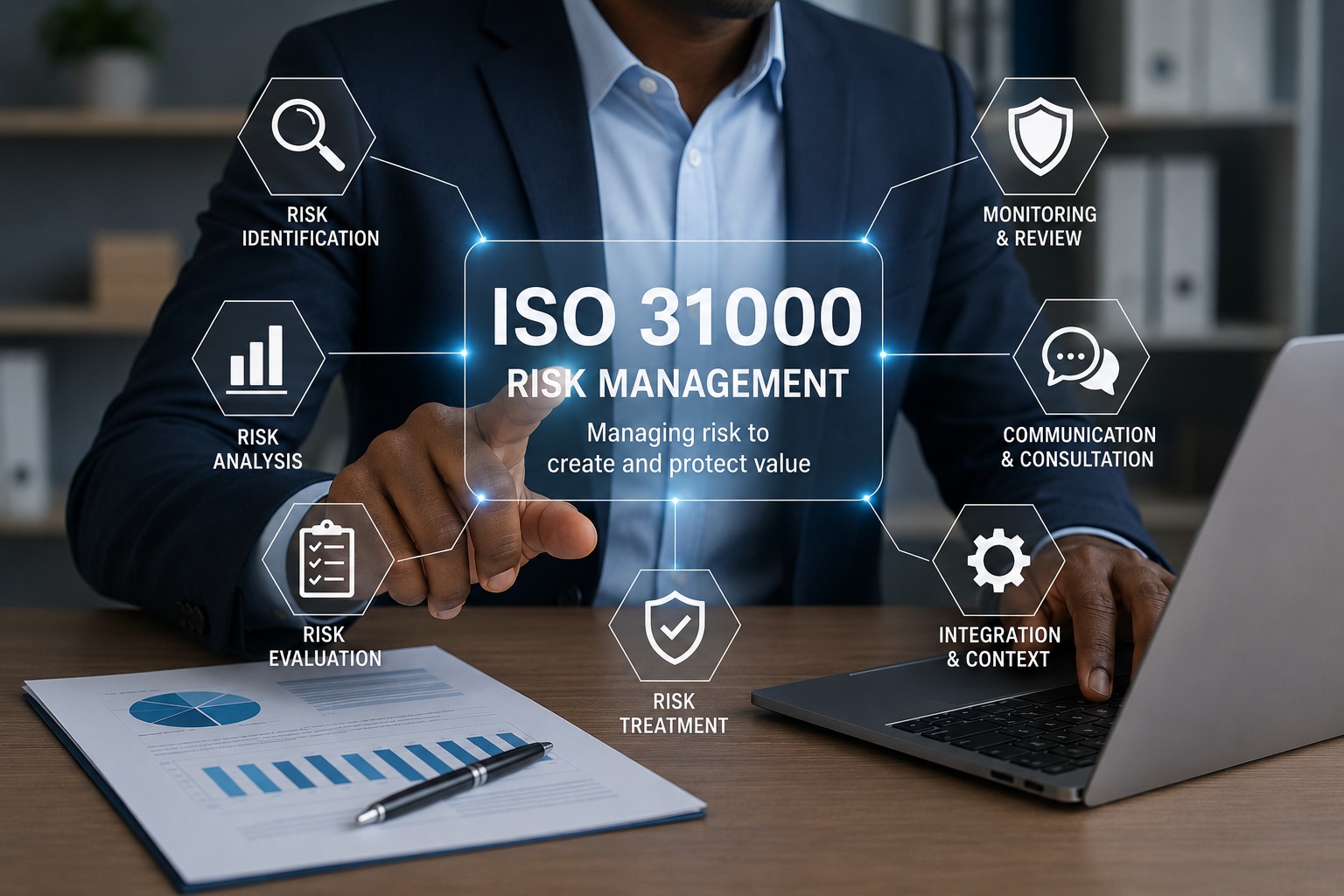
ISO 31000 Risk Management Risk Manager Training Course – Live Virtual Tutor-Led (PECB)

Wishlist Share

About Course

The ISO 31000 Risk Management Risk Manager Training Course – PECB Certified is a comprehensive, live virtual tutor-led programme designed to equip participants with the knowledge and competencies required to establish, implement, and manage an effective risk management framework based on the ISO 31000 guidelines.

This course provides a structured approach to identifying, analyzing, evaluating, treating, and monitoring risks within an organization. It emphasizes the integration of risk management into governance, strategy, and decision-making processes to enhance performance, resilience, and compliance.

Through interactive virtual sessions, case studies, and practical exercises, participants gain the skills needed to lead risk management activities and support organizational decision-making using risk-based thinking.

The course follows the PECB certification framework and prepares participants for the PECB ISO 31000 Risk Manager examination.

Show More

What Will You Learn?

  • Understand ISO 31000 principles and risk management framework.
  • Identify and evaluate organizational risks effectively.
  • Develop and implement risk treatment strategies.
  • Integrate risk management into governance and decision-making.
  • Monitor and report risk performance.
  • Strengthen organizational resilience and performance.
  • Apply risk-based thinking across business processes.
  • Lead risk management activities confidently.
  • Communicate risk information effectively to stakeholders.
  • Prepare for the PECB ISO 31000 Risk Manager certification exam.

Course Content

Introduction to Risk Management
Fundamentals of risk management Risk definitions and key concepts Principles of ISO 31000 Importance of risk-based thinking

ISO 31000 Framework and Guidelines
Structure of ISO 31000 Risk management principles Leadership and integration into governance Organizational context and risk culture

Risk Identification Process
Methods of identifying risks Internal and external risk factors Strategic, operational, financial, and compliance risks Risk registers and documentation tools

Risk Analysis and Evaluation
Qualitative and quantitative risk analysis Likelihood and impact assessment Risk prioritization techniques Risk evaluation and decision criteria

Risk Treatment Strategies
Risk avoidance, mitigation, transfer, and acceptance Development of risk treatment plans Control selection and implementation Cost-benefit considerations

Risk Monitoring and Review
Monitoring risk performance indicators Continuous improvement of risk processes Updating risk registers Internal audits and assurance mechanisms

Risk Communication and Reporting
Risk communication strategies Reporting frameworks and structures Stakeholder engagement Transparency in risk decision-making

Integration of Risk Management
Embedding risk into organizational processes Alignment with ISO management systems Governance and compliance integration Strategic and operational alignment

Crisis and Opportunity Management
Understanding positive and negative risks Crisis preparedness and response Opportunity identification and exploitation Organizational resilience

Risk Manager Competence and Certification Preparation
Role and responsibilities of a risk manager Leadership in risk management Ethical considerations Case studies and exam preparation

Student Ratings & Reviews

No Review Yet
No Review Yet